Wembley’s January Newsletter
Special Needs Inclusion
What is inclusion within the special needs field?
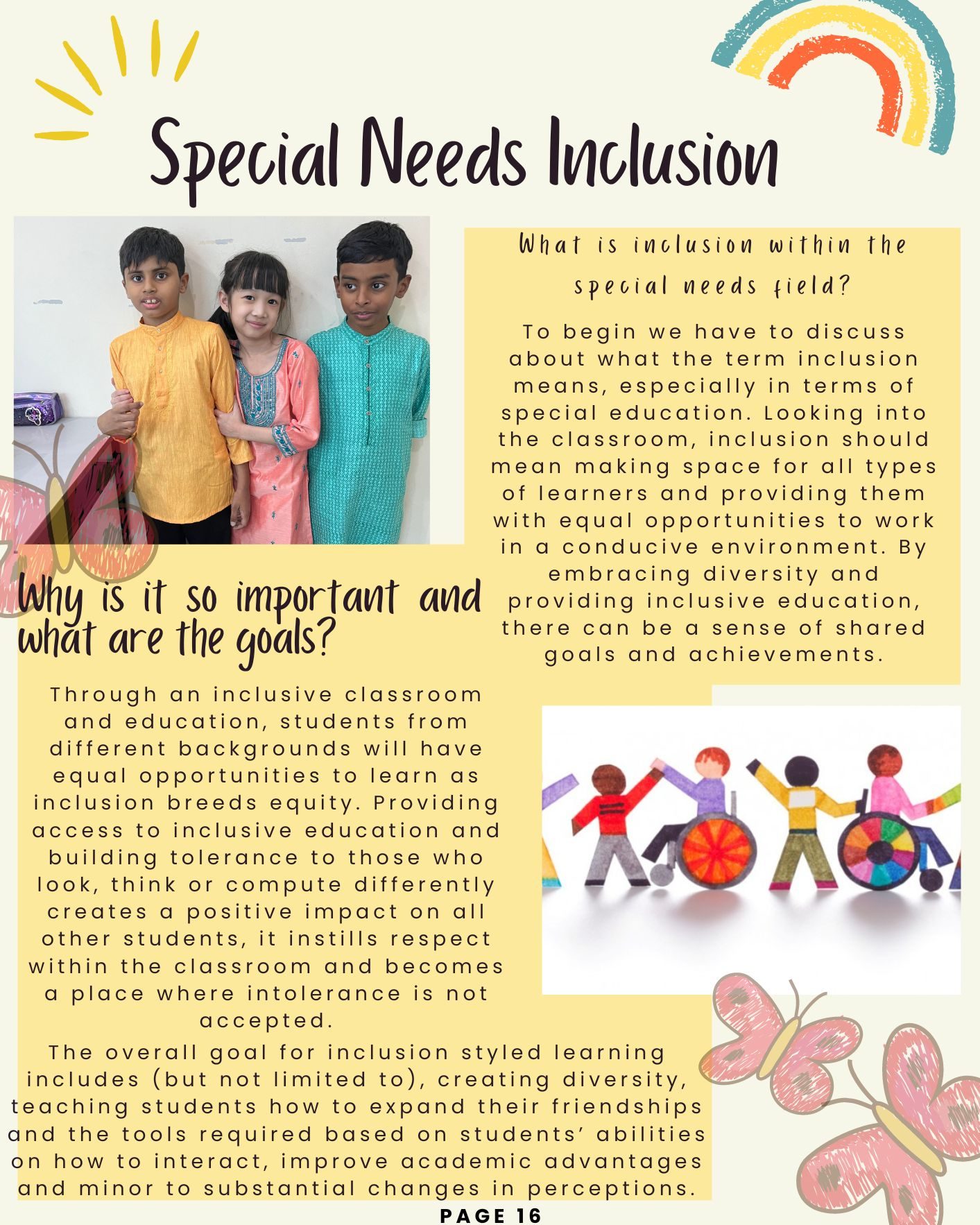
To begin we have to discuss about what the term inclusion means, especially in terms of special education. Looking into the classroom, inclusion should mean making space for all types of learners and providing them with equal opportunities to work in a conducive environment. By embracing diversity and providing inclusive education, there can be a sense of shared goals and achievements.
Why is it so important and what are the goals?
Through an inclusive classroom and education, students from different backgrounds will have equal opportunities to learn as inclusion breeds equity. Providing access to inclusive education and building tolerance to those who look, think or compute differently creates a positive impact on all other students, it instills respect within the classroom and becomes a place where intolerance is not accepted.
The overall goal for inclusion-styled learning includes (but is not limited to), creating diversity, teaching students how to expand their friendships, and the tools required based on students’ abilities on how to interact, improve academic advantages and minor to substantial changes in perceptions.
How do we create an inclusive learning environment?
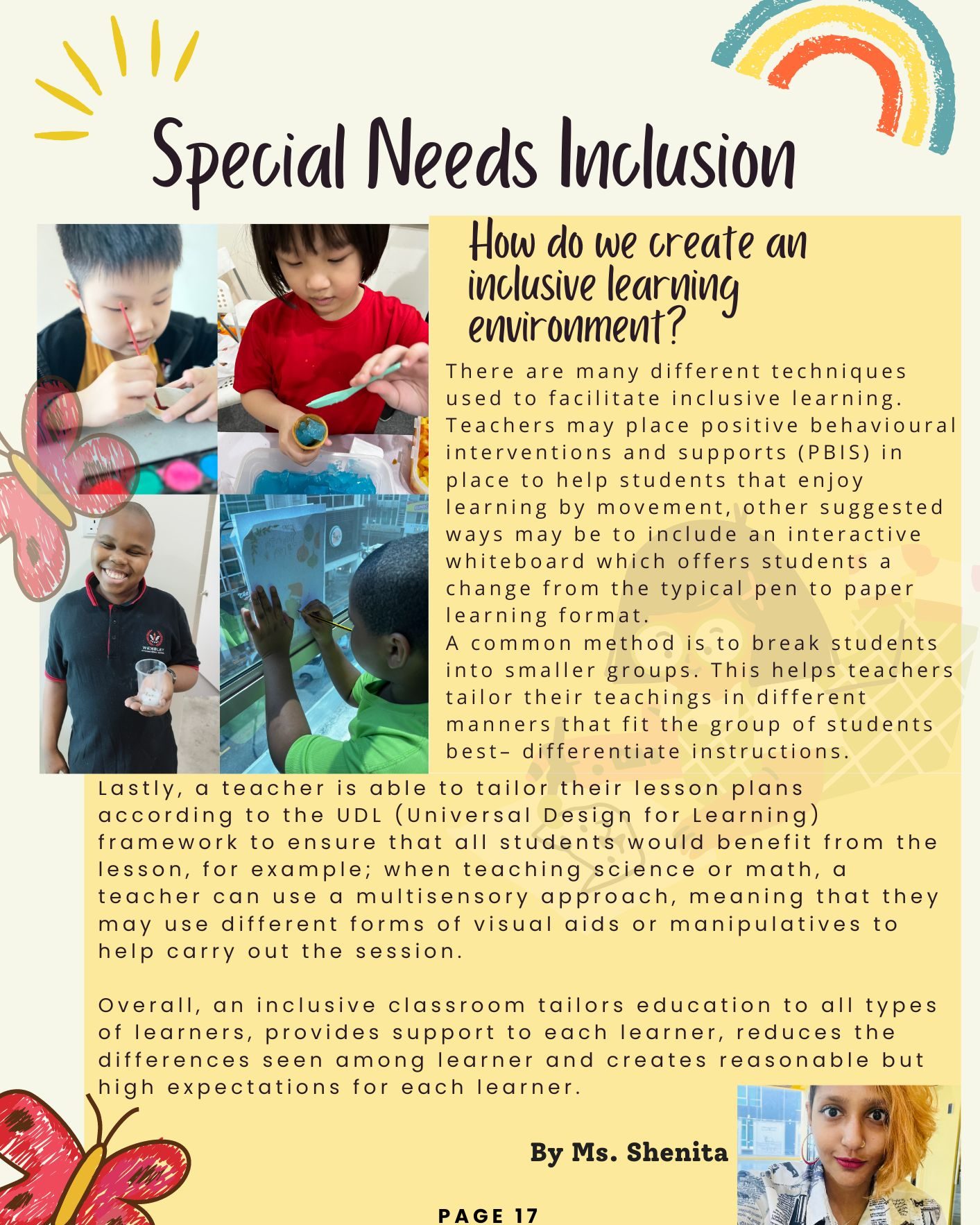
There are many different techniques used to facilitate inclusive learning. Teachers may place positive behavioural interventions and supports (PBIS) in place to help students that enjoy learning by movement, other suggested ways may be to include an interactive whiteboard which offers students a change from the typical pen-to-paper learning format.
A common method is to break students into smaller groups. This helps teachers tailor their teachings in different manners that fit the group of students best– differentiate instructions.
Lastly, a teacher is able to tailor their lesson plans according to the UDL (Universal Design for Learning) framework to ensure that all students would benefit from the lesson, for example; when teaching science or math, a teacher can use a multisensory approach, meaning that they may use different forms of visual aids or manipulatives to help carry out the session.
Overall, an inclusive classroom tailors education to all types of learners, provides support to each learner, reduces the differences seen among learners and creates reasonable but high expectations for each learner.